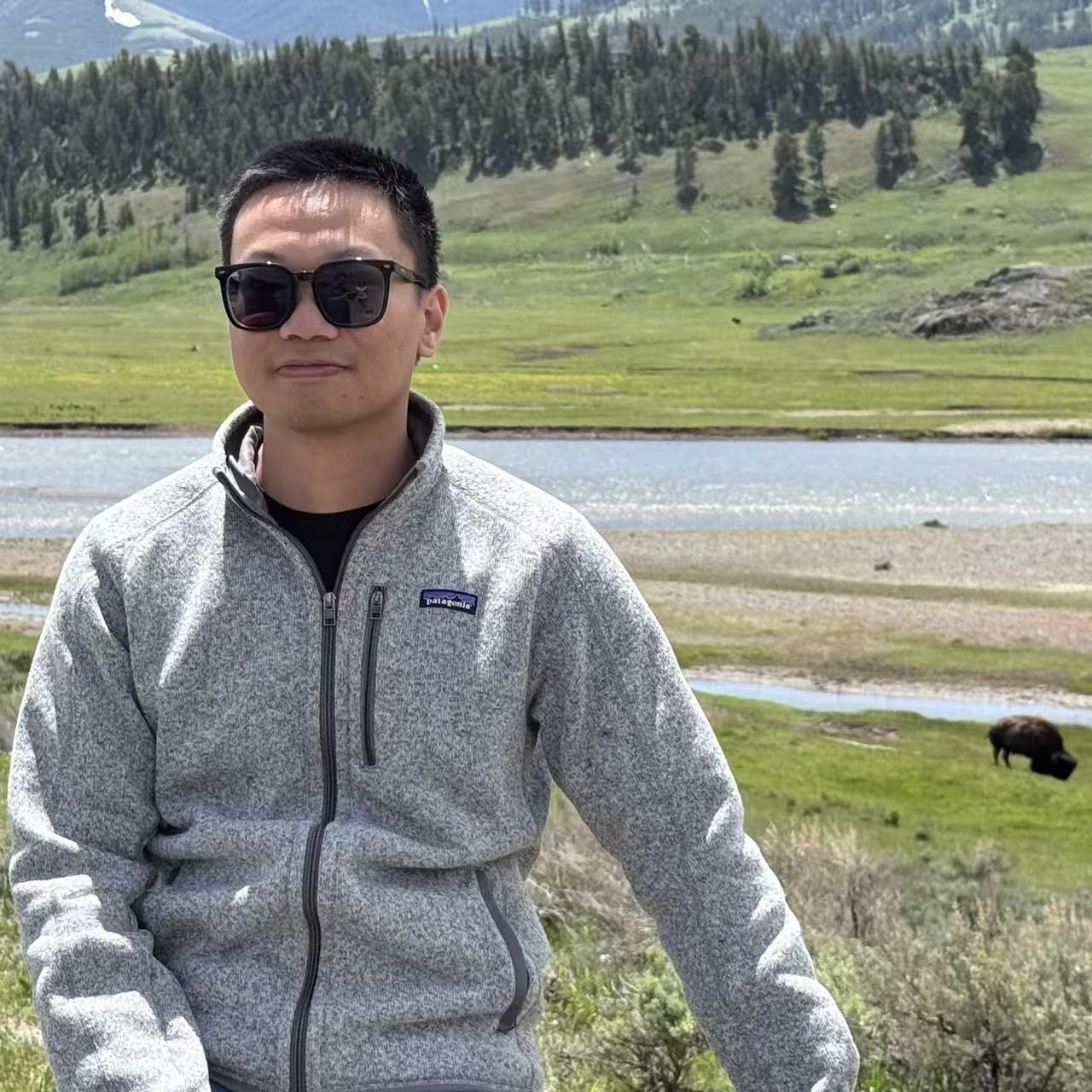
I am a Ph.D. candidate in Chemical and Biological Engineering at the University of Wisconsin–Madison, advised by Prof. Joel A. Paulson. I develop AI systems for autonomous experimentation, in which a laboratory selects the next experiment, interprets the resulting measurements, and closes the design loop with minimal human intervention.
My current work contributes to the perception and decision-making layers of the AlloyBot self-driving laboratory, which aims to accelerate high-temperature alloy development by two orders of magnitude. On the perception side, I apply vision foundation models to the analysis of scanning electron microscopy images of alloy microstructures. We deploy a human-in-the-loop framework to integrate domain knowledge into the system, allowing expert judgment to guide microstructural interpretation while the platform becomes progressively more autonomous. This work extends to Bayesian optimization for experiment design and machine learning for alloy property prediction, enabling the platform to determine which alloy to synthesize and characterize next.
My prior work in scientific machine learning includes goal-directed Bayesian design for molecular dynamics campaigns, which targets system-level features such as phase boundaries rather than a single optimum; sample-efficient generative and multi-objective molecular design; deep learning for the discovery of plastic-binding peptides; and a deep learning model for digital soil organic carbon mapping that quantifies the relative importance of environmental predictors. These projects share a common set of concerns: allocating expensive evaluations efficiently, quantifying the uncertainty that determines how far a prediction can be trusted, and preserving the interpretability that turns a model output into scientific insight.
News
- Jul 2026 Our abstract "Adaptive Semantic Segmentation of Alloy Microstructures in Scanning Electron Microscopy via Foundation Model Embeddings and Uncertainty-Guided Annotation" has been accepted for a poster presentation at the 2026 AIChE Annual Meeting.
- Jul 2026 Our abstract "Beyond Optimization in Molecular Dynamics: Goal-Directed Bayesian Design with Trajectory-Based Noise Modeling" has been accepted for an oral presentation at the 2026 AIChE Annual Meeting.
- Jul 2026 Our abstract "AlloyBot Self-Driving Laboratory to Develop High Temperature Alloys 100x Faster" has been accepted to the 2027 TMS Annual Meeting & Exhibition.
- Jul 2026 Our abstract "AlloyBot Automated SEM–XRD Pipeline for High-Throughput Microstructure Characterization" has been accepted to the 2027 TMS Annual Meeting & Exhibition.
- Apr 2026 Our preprint "Discovering Plastic-Binding Peptides with Favorable Affinity, Water Solubility, and Binding Specificity Through Deep Learning and Biophysical Modeling" is available on bioRxiv. [bioRxiv]
- Feb 2026 Our paper "MD-BAX: A General-Purpose Bayesian Design Framework for Molecular Dynamics Simulations with Input-Dependent Noise" has been published in The Journal of Chemical Physics. [DOI]
- Dec 2025 Our paper "Generative Multiobjective Bayesian Optimization with Scalable Batch Evaluations for Sample-Efficient De Novo Molecular Design" has been published in Industrial & Engineering Chemistry Research. [DOI]
- Jun 2024 Our paper "Importance of Terrain and Climate for Predicting Soil Organic Carbon Is Highly Variable across Local to Continental Scales" has been published in Environmental Science & Technology. [DOI]